
Most people get this backwards. They wait until they feel fit enough, then plan a real hike, and the gap between the two never closes.
The truth runs the other way. You don’t get fit and then hike.
You get fit by hiking.
Which means the first walk back should feel almost too easy. Flat, short, over before your body has a reason to complain. That is not a wasted outing. That is the outing that brings you back next week.
So picture the actual first trail. Not a summit, not a view you have to earn. A level path through a park or a stretch of woods, twenty or thirty minutes, turning around while you still feel good.
That is the whole beginning.
Why hiking suits the body after 50
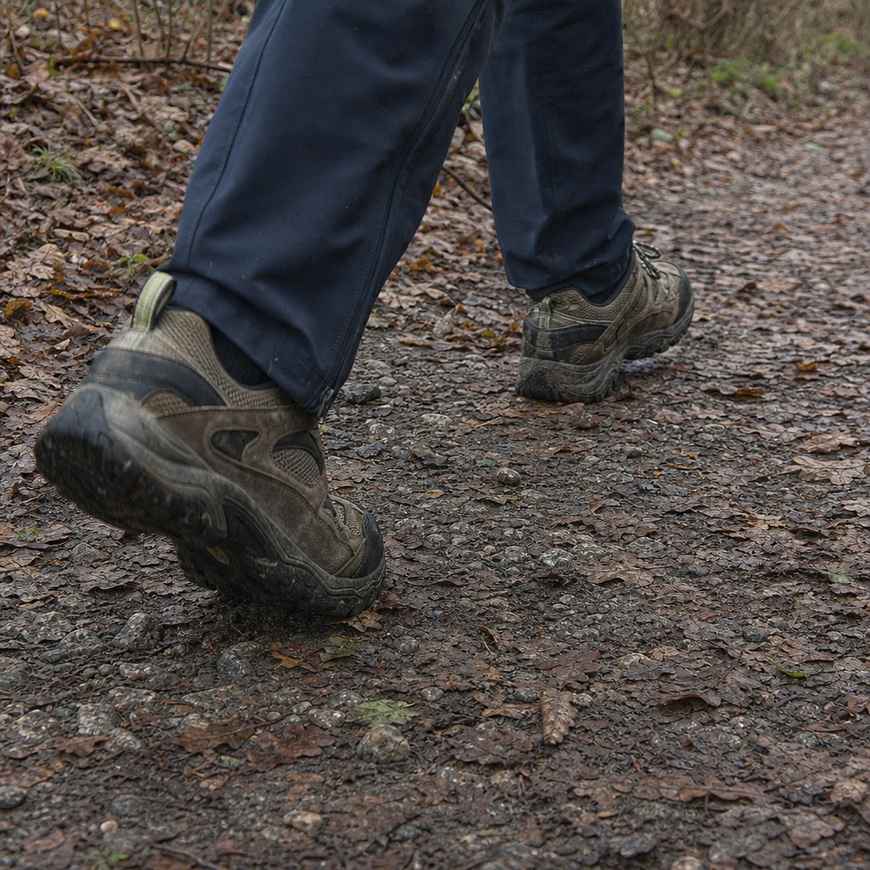
Walking on uneven ground does several things at once, which is what makes it such a good fit after 50.
It is cardio, but gentle and self-paced. It builds leg strength on every small rise. And because the trail is never perfectly flat, it quietly trains balance with every step, which is the thing that protects you from falls later.
Hiking is strength, balance, and cardio rolled into one walk in the woods. Few activities cover that much ground for so little equipment.
There is also the part no fitness tracker measures. A long walk among trees clears the head in a way a treadmill never will.
You come back lighter, not just more tired.
And it scales to any level. The same trail that humbles you in March is an easy stroll by June. You set the distance, the pace, and the hills.
Getting outside is half the point; weather is a clothing problem, not a reason to stay in.
That last part matters more than people expect. The walk you skip because of a little rain is the walk that breaks the habit. Good boots and a rain layer solve more problems than waiting for a perfect day ever will.
Your first month back: a realistic plan
Do not start with terrain. Start with time.
The goal of the first month is simple: get your body used to being on its feet outdoors again, before you ask it to handle hills or distance. Build the easy thing first, then add difficulty later.
- Week 1: short, flat, twice. Two walks of 20 to 30 minutes on level ground, a park path or a paved trail. Easy enough to talk the whole way.
- Week 2: add time, not terrain. Same flat ground, stretch each walk to 40 minutes, and add a third walk if it feels good. Distance is still beside the point.
- Week 3: gentle hills. Keep the time similar but pick a route with a few easy rises. Let your legs meet a little incline.
- Week 4: an easy real trail. A short, well-marked trail with mild ups and downs. An hour, no more, turning back before you are tired.
That is a month. Notice what it does not do: it never rushes you onto a hard trail before your legs and lungs are ready.
Build time before you build terrain. A flatter, longer walk prepares the body better than a short, steep scramble that leaves you sore for three days.
The rhythm matters more than any single walk. Two or three outings a week, every week, beats one heroic hike followed by a fortnight on the couch.
Consistency beats intensity; small repeatable habits outlast any program.
After this month, you progress the same patient way. Add ten minutes, then a slightly longer trail, then a little more climb. Let each step settle before the next.
What actually matters on the trail
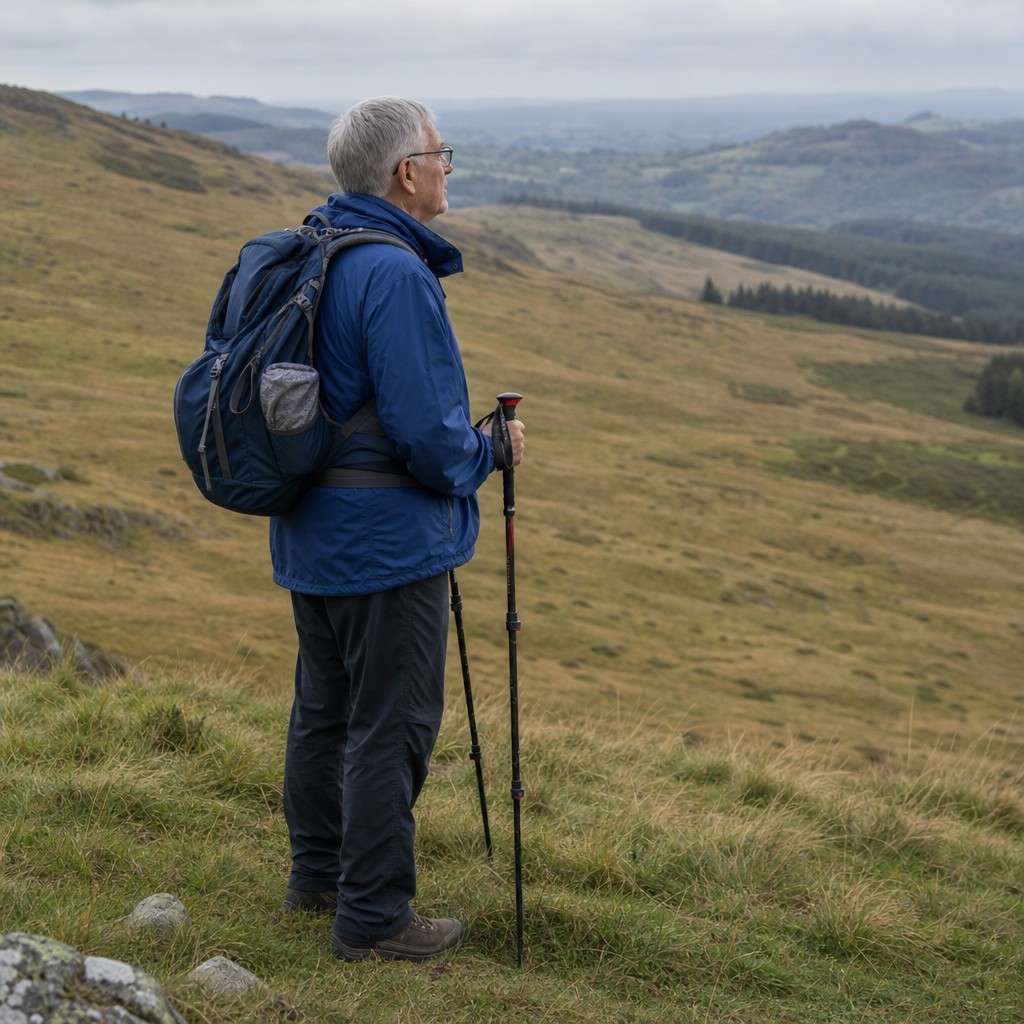
A few practical things make the difference between a walk you enjoy and one you regret.
Footwear with real grip comes first. Not fashion, not the lightest shoe. A trail shoe or light boot with a sole that holds on loose dirt and wet rock. Most early stumbles trace back to the wrong shoes.
Then poles. A pair of trekking poles gives you two extra points of contact, steadies you on uneven footing, and takes real load off the knees going downhill.
Use the poles most on the descents. Downhill is where knees complain and where a slip is most likely, and that is exactly where two poles earn their keep.
Pace yourself by the talk test, not by a watch. If you can hold a conversation, you are going at the right speed. If you are gasping, you have gone too hard, and the trail is not going anywhere.
Pick easy, well-marked trails while you rebuild. Save the remote, poorly signed routes for when your footing and confidence have come back.
And learn to turn around. The summit is optional. Coming home with something left in the tank is not a failure.
Turning back early is a hiker’s skill, not a hiker’s defeat.
Some of your best walks will be the ones you cut short. The trail will still be there next week, and so will you.
The honest worries, met calmly
Most people coming back to hiking after 50 carry one of three quiet worries. None of them holds up.
The first is the knees, especially going downhill. It is a fair concern, and it has a fair answer.
Poles, shorter steps, and easier descents take most of the load off the knees. Choose routes that come down gently, shorten your stride on the steep bits, and let the poles do their job. This is general information, not medical advice, so if a knee genuinely hurts rather than just protests, get it looked at before you push on.
The second is balance and footing on uneven ground. This is the very thing hiking trains, and the fix is to start where the ground is forgiving. Flat, even paths first, rougher trails only once your feet have relearned the work.
The third worry is the loudest and the weakest.
“I’m too out of shape for this.”
If that is the thought, the plan does not change, it just starts smaller. A ten-minute flat walk is still a walk. Start where you are, not where you were, and let the body do what bodies still do at every age.
Start where you are, not where you were; train the body you have today.
You do not need to be fit to take the first walk. You take the first walk to get fit. That is the whole thing, and it starts on a flat path this week.